XGF-X Underslung Suspension Clamp
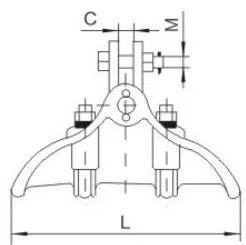
Models: XGF-5X, 5X/GH, 6X (3 sizes) · Conductor: 23.7–43 mm · Nominal Failure Load: 60–90 kN · Reference Weight: 3.5–4.8 kg
The X is the underslung pattern — the clamp hangs below the attachment on a deep cradle, with H running 135 to 180 mm. Where the XGF-K top support keeps the conductor close to the cross-arm, the X deliberately drops it, and that drop is doing three jobs at once: it gives the conductor room to swing, it lets the assembly articulate, and it keeps the conductor’s own movement away from the hardware above it.
The 6X is the strongest single-groove clamp on this site short of the XGJ crossing range: 90 kN on a 36 to 43 mm conductor in 4.8 kg.
Technical Parameters
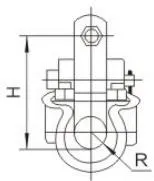
| Model | Applicable Conductor Range (mm) | Main Dimensions (mm) | Nominal Failure Load(kN) | Reference Weight (kg) | ||||
|---|---|---|---|---|---|---|---|---|
| H | C | M | R | L | ||||
| XGF-5X | 23.7~27.6 | 135 | 20 | 16 | 16 | 300 | 60 | 3.5 |
| XGF-5X/GH | 23.7~27.6 | 150 | 18 | 16 | 17 | 300 | 70 | 4.8 |
| XGF-6X | 36~43 | 180 | 20 | 18 | 22 | 300 | 90 | 4.8 |
Three Rows, Three Different Clamps
These are not three sizes of one design. Read the columns across and each row changes something other than the conductor:
| XGF-5X | XGF-5X/GH | XGF-6X | |
|---|---|---|---|
| Conductor | 23.7~27.6 | 23.7~27.6 | 36~43 |
| Drop H | 135 | 150 | 180 |
| Hanger C | 20 | 18 | 20 |
| Groove R | 16 | 17 | 22 |
| Pin M | 16 | 16 | 18 |
| Rating | 60 kN | 70 kN | 90 kN |
| Weight | 3.5 kg | 4.8 kg | 4.8 kg |
The GH is a different body, not a re-rated one. It takes the same conductor as the plain 5X but the groove is a millimetre roomier, the drop is 15 mm deeper, the hanger is narrower and the rating is 10 kN higher — for 1.3 kg more. Order XGF-5X for a 60 kN string and you do not get a 70 kN clamp.
The 6X is a size up in everything, including the pin: M 18 against M 16 on both 5X rows. That means a different yoke and a different pin, so the 6X is not a drop-in replacement at a string built for the 5X. It is 1.3 kg heavier than the 5X for 15 mm more conductor and 30 kN more rating, which is a good trade if you need it.
The Rating Ladder
60 → 70 → 90 kN across three rows. For a family with only three models that is a wide spread, and it makes the X the right line to be on if you have a mixed string schedule: 60 kN distribution, 70 kN subtransmission, 90 kN for the exposed spans, all on the same 300 mm body length and the same 135 to 180 mm drop family.
The 90 kN figure deserves a note. A 90 kN suspension clamp is unusual — most utilities build suspension strings at 40 to 70 kN and put the strength into the dead-end. The 6X exists because on a long river or valley crossing the suspension point itself takes the full unbalanced load when the adjacent span drops, and 70 kN is not enough margin.
Reading R on This Page
The 6X follows the rule used across the XGU and XGT families — half the upper conductor diameter plus 0.5 mm: 43 ÷ 2 + 0.5 = 22. Exact.
The two 5X rows do not. Their groove is 2 to 3 mm roomier than the 27.6 mm upper limit needs, and the GH is a millimetre roomier again than the plain X. On a cradle clamp that is not a mistake — the conductor enters the groove from a steeper angle than on a top-support clamp, so the mouth has to be more open or the conductor is pinched on entry.
Size these three from the range column, not from R. R tells you which die made the groove, not which conductor it takes.
Material & Finish
- Body and keeper: aluminium alloy
- Cotter pin: stainless steel
- Remaining hardware: steel, hot-dip galvanized
- Finish: hot-dip galvanized to ISO 1461 on the steel parts, minimum 65 μm
- Tolerance: ±0.5 mm on the groove and mounting interfaces, coating thickness checked to ISO 2178
- Certification: mill test certificates on request
Related Clamps
XGF-K top support type — the same 23.7 to 27.6 mm conductor carried 80 mm higher, for tight clearances.
XGF handbag corona-free type — EHV pattern for 36 to 51 mm where corona is the design case.
XG handbag range — 13 to 54 mm at 40 to 80 kN, if you do not need the deep drop.