FZJ Counterweight Base
Model: FZJ-15 (one size) · Height: 140 mm · Weight: 15.0 kg · Bore / bolt: C 20, M 16
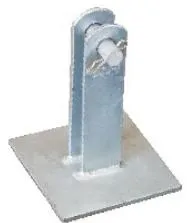
One Row, And That Is The Whole Range
The sheet has a single data row. There is one base, one height and one weight, and no larger or smaller version.
That is the right way to read it: the base is the seat, and the mass is built on top of it. A string that needs more than 15 kg takes plates stacked on this base — ZC, ZD and FZC all seat on the same pattern — so the range is covered by the stack, not by a second casting. A base of a different mass is a special order.
The Model Number Is The Weight
FZJ-15 → 15.0 kg. The digits and the weight column agree to the decimal.
The same convention holds on the counterweight plates sheet, where FZC-10 is 10.0 kg, FZC-15Y is 15.0 kg and FZC-20 is 20.0 kg — three for three. So the family is named by mass, which is what makes a code you have not seen readable: FZJ-30 would be a 30 kg base.
Three Dimensions
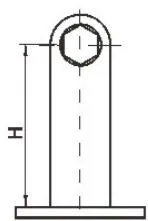
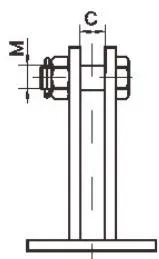
The row prints C 20, M 16, H 140:
- H is 140 mm — a squat body, 140 mm tall carrying 15 kg.
- M is 16 — the fixing thread, M16, which bolts the base to the bracket or the clamp.
- C is 20 mm — the bore, the hole the weight rod passes through.
Two numbers, two jobs: C carries the stack, M carries the fitting to the structure. The bore is what the rod has to clear; the plates above it are drilled Φ 24, so the rod sizes from the bore and the plates take up the clearance.
Material And Finish
A counterweight base is outside for the life of the line, so the build matters more than the two dimensions. This one is grey iron, hot-dip galvanised, the same finish as the plates that stack on it and the clamps it hangs from.
The mass is the function: 15 kg at 140 mm of height is a compact casting, and that is the point — a base that reached the same mass in concrete would be four times the volume and would not fit between the yoke and the tower steel.
For the load path, the base is not the rated part: the suspension clamp above it carries the conductor, and the counterweight only holds the string down against uplift. Send the uplift figure and the clamp model with the enquiry and we confirm the stack.
Technical Parameters
| Model | Main Dimensions(mm) | Reference Weight(kg) | ||
|---|---|---|---|---|
| C | M | H | ||
| FZJ-15 | 20 | 16 | 140 | 15.0 |
Related Pages
Plates that stack on a base, ten sizes with dimensions: counterweight plates. The complete assembly and its clevis options: counterweight assembly. Attachment hardware above the clamp: GD attachment point fitting.
Note: One size — FZJ-15, H 140 mm, C 20, M 16, 15.0 kg. The model number is the mass, and the same convention holds for FZC-10, FZC-15Y and FZC-20 on the plates sheet. C is the bore the weight rod passes through and M16 the thread that fixes the base to the structure; the plates above are drilled Φ 24, so the bore sizes the rod. Heavier stacks are made with plates on this base, not with a second casting. Grey iron, hot-dip galvanised.