FRYJ Vibration Damper
Models: 9 dampers · Conductor: LGJ-35 to LGJ-630 · Matched rods: FY-0235 – FY-03630 · Weight: 1.6–6.9 kg
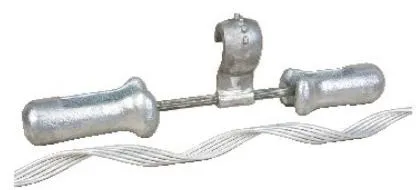
The Damper Is One Article, The Rods Are Another
Every row of this sheet carries two part numbers. The FRYJ code is the damper. The FY code is the preformed armor rod set that sits under its clamp, protecting the conductor from the jaw. They are separate articles and in most projects they are ordered separately.
The table itself proves the weight column is the damper only: FRYJ-2/G appears twice, once against FY-0250 (rods for 9.00–9.60 mm conductor) and once against FY-0270 (10.80–11.60 mm), and both rows print 2.6 kg. Two rod sets of different bore cannot weigh the same, so the 2.6 kg cannot include the rods. The same holds for FRYJ-2/4 across FY-02185 and FY-03240, and FRYJ-4/6 across FY-03500 and FY-03630.
Practical consequence: a quotation for “FRYJ-2/G” buys the damper. Add the FY code, or the line gets a damper with nothing to clamp onto.
Nine Dampers, Twelve Rod Sets
The model column uses vertical merges, so the row count overstates the range. There are nine distinct dampers and twelve distinct rod sets, and three of the dampers serve two sets each:
| Damper | Weight | Rod set | Conductor OD | Rod length | Conductors listed |
|---|---|---|---|---|---|
| FRYJ-1/G | 1.6 kg | FY-0235 | 7.50–8.16 | 700 | LGJ-35/6, LJ-35, GJ-35, GLB-35 |
| FRYJ-2/G | 2.6 kg | FY-0250 | 9.00–9.60 | 700 | LGJ-50/8, LJ-50, GJ-50/55, GLB-50/55 |
| FRYJ-2/G | 2.6 kg | FY-0270 | 10.80–11.60 | 700 | LGJ-50/30, LGJ-70/10, LJ-70, GJ-70/80, GLB-70/80 |
| FRYJ-3/G | 4.3 kg | FY-0295 | 12.48–13.87 | 800 | LGJ-70/40, LGJ-95/15, LGJ-95/20, LJ-95, GJ-95/100, GLB-95/100 |
| FRYJ-1/2 | 1.7 kg | FY-02120 | 14.26–16.00 | 800 | LGJ-95/55 – 150/8 (five), LJ-120/150, GJ-120/150, GLB-120/150 |
| FRYJ-1/3 | 2.3 kg | FY-02150 | 16.67–18.00 | 800 | LGJ-120/70 – 185/10 (five), LJ-185, GJ-185, GLB-185 |
| FRYJ-2/4 | 3.5 kg | FY-02185 | 18.75–20.00 | 800 | LGJ-185/25 – 210/25 (five), LJ-210/240 |
| FRYJ-2/4 | 3.5 kg | FY-03240 | 20.86–22.40 | 900 | LGJ-210/35 – 240/55 (five), LJ-300 |
| FRYJ-3/5 | 5.0 kg | FY-03300 | 23.01–25.20 | 900 | LGJ-300/15 – 300/70 (six) |
| FRYJ-4/5 | 5.0 kg | FY-03400 | 25.90–28.00 | 900 | LGJ-400/20 – 400/65 (five), LJ-400 |
| FRYJ-4/6 | 6.9 kg | FY-03500 | 29.12–30.96 | 1000 | LGJ-400/95, 500/35, 500/45, 500/65, LJ-500 |
| FRYJ-4/6 | 6.9 kg | FY-03630 | 32.67–34.82 | 1000 | LGJ-630/45, 55, 80, LJ-630 |
Select by conductor outside diameter, not by square millimetres. The rod set is defined by the diameter range in brackets, and those ranges are contiguous but not continuous — every step leaves a dead band:
| Gap | Width |
|---|---|
| 8.16 → 9.00 | 0.84 mm |
| 9.60 → 10.80 | 1.20 mm |
| 11.60 → 12.48 | 0.88 mm |
| 13.87 → 14.26 | 0.39 mm |
| 16.00 → 16.67 | 0.67 mm |
| 18.00 → 18.75 | 0.75 mm |
| 20.00 → 20.86 | 0.86 mm |
| 22.40 → 23.01 | 0.61 mm |
| 25.20 → 25.90 | 0.70 mm |
| 28.00 → 29.12 | 1.12 mm |
| 30.96 → 32.67 | 1.71 mm |
A conductor measuring 28.5 mm or 31.5 mm outside has no rod set on this sheet, even though it falls between listed sizes. Measure the conductor and quote the diameter; do not pick the set whose square millimetres look closest.
The Rod Code Stops Decoding Halfway Down
From FY-02120 onward the trailing digits are a conductor area — 120, 150, 185, 240, 300, 400, 500, 630 — and you can read the code without the table.
The first four do not work that way. FY-0235, FY-0250, FY-0270 and FY-0295 carry numbers that match no conductor area, no diameter and no length printed anywhere on the page: 235, 250, 270, 295. They are a legacy series and the sheet gives no key.
The two-digit prefix does not help either. It is 02 for every set from FY-0235 through FY-02185 — including the four undecodable ones — then switches to 03 from FY-03240 upward. So 02 covers both a 235 code and a 120 code, and the prefix cannot be used to infer size.
The Rod Length Is A Class, Not A Dimension
Only four lengths appear — 700, 800, 900 and 1000 mm — for twelve sets. 700 covers three sets, 800 covers four, 900 covers three, 1000 covers two.
Note that FY-03300 (23.01–25.20 mm) and FY-03400 (25.90–28.00 mm) are different rod sets with different bores and both are 900 mm. So the length is a size class, not the length of that particular spiral.
The column also explains the old header, which read “Reference Weight 1.6–900 kg”. 900 is this length in millimetres, not a weight. The heaviest article on the page is 6.9 kg.
Where The Weight Runs Backwards
The damper mass should climb with the conductor. In the /G group it does — 1.6, 2.6, 4.3 kg. Then the plain-numbered group starts again at the bottom:
- FRYJ-1/2 is 1.7 kg and serves up to LGJ-150/8.
- FRYJ-2/G is 2.6 kg and serves LGJ-50 to LGJ-70.
The lighter damper is the one for the bigger conductor. FRYJ-1/3 at 2.3 kg is likewise lighter than FRYJ-2/4 at 3.5 kg, which serves 185 to 240 mm². And FRYJ-3/5 and FRYJ-4/5 share 5.0 kg across two different rod bores.
Across the whole sheet the mass only moves from 1.6 to 6.9 kg while the conductor goes from 35 to 630 mm² — an 18-fold area range inside a 4.3-fold mass range. A damper’s mass is chosen against conductor tension and diameter and tuned to a frequency, so a spread this narrow means the sizes are mass classes rather than one tuning per conductor.
The sheet prints no frequency, no inertia and no clamp bolt size. So the tuning cannot be checked from the catalogue. If the damper is going onto a line with a known aeolian vibration problem, ask us for the frequency table before you commit to a model — the weight alone will not tell you.
Above 240 mm² Only ACSR Is Listed
The aluminum strand, galvanized steel strand and aluminum-clad steel strand columns empty out progressively:
- GJ and GLB stop at 185 mm² (last filled on the FY-02150 row).
- LJ stops at 630, but the second FY-03240 block already drops the steel columns.
- From FRYJ-3/5 (FY-03300) upward, only ACSR is listed — three of the four conductor columns are blank for the 300, 400/5 and 630 sizes.
So the sheet does not offer a damper for a 300 mm² all-aluminium or steel-strand line, although the same damper body might physically fit. Ask before assuming.
Cells With Two Conductors In Them
Several cells read GJ-95GJ-100, GLB-95GLB-100, LJ-120LJ-150, GJ-120GJ-150, GLB-120GLB-150, LJ-210LJ-240. These are two conductor sizes in one cell, not a typo — one rod set serves both, which is exactly what a diameter-based range is for.
One string is a genuine typo: LGJ95/20 is missing its hyphen and is the same conductor as LGJ-95/15 on the row above. Read it as LGJ-95/20.
Technical Parameters
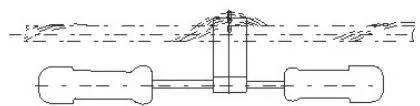
| Model | Reference Weight(kg) | Matching Preformed Armor Rods Model | Preformed Armor Rods Length | Applicable Conductor(mm2) | |||
|---|---|---|---|---|---|---|---|
| ACSR | Aluminum Strand | Galvanized Steel Strand | Aluminum-Clad Steel Strand | ||||
| FRYJ-1/G | 1.6 | FY-0235(7.50~8.16) | 700 | LGJ-35/6 | LJ-35 | GJ-35 | GLB-35 |
| FRYJ-2/G | 2.6 | FY-0250(9.00~9.60) | 700 | LGJ-50/8 | LJ-50 | GJ-50 | GLB-50 |
| GJ-55 | GLB-55 | ||||||
| FY-0270(10.80~11.60) | LGJ-50/30 | LJ-70 | GJ-70 | GLB-70 | |||
| LGJ-70/10 | GJ-80 | GLB-80 | |||||
| FRYJ-3/G | 4.3 | FY-0295(12.48~13.87) | 800 | LGJ-70/40 | LJ-95 | GJ-95GJ-100 | GLB-95GLB-100 |
| LGJ-95/15 | |||||||
| LGJ95/20 | |||||||
| FRYJ-1/2 | 1.7 | FY-02120(14.26~16.00) | 800 | LGJ-95/55 | LJ-120LJ-150 | GJ-120GJ-150 | GLB-120GLB-150 |
| LGJ-120/7 | |||||||
| LGJ-120/20 | |||||||
| LGJ-120/25 | |||||||
| LGJ-150/8 | |||||||
| FRYJ-1/3 | 2.3 | FY-02150(16.67~18.00) | 800 | LGJ-120/70 | LJ-185 | GJ-185 | GLB-185 |
| LGJ-150/20 | |||||||
| LGJ-150/25 | |||||||
| LGJ-150/35 | |||||||
| LGJ-185/10 | |||||||
| FRYJ-2/4 | 3.5 | FY-02185(18.75~20.00) | 800 | LGJ-185/25 | LJ-210LJ-240 | ||
| LGJ-185/30 | |||||||
| LGJ-185/45 | |||||||
| LGJ-210/10 | |||||||
| LGJ-210/25 | |||||||
| FY-03240(20.86~22.40) | 900 | LGJ-210/35 | LJ-300 | ||||
| LGJ-210/50 | |||||||
| LGJ-240/30 | |||||||
| LGJ-240/40 | |||||||
| LGJ-240/55 | |||||||
| FRYJ-3/5 | 5.0 | FY-03300(23.01~25.20) | 900 | LGJ-300/15 | |||
| LGJ-300/20 | |||||||
| LGJ-300/25 | |||||||
| LGJ-300/40 | |||||||
| LGJ-300/50 | |||||||
| LGJ-300/70 | |||||||
| FRYJ-4/5 | 5.0 | FY-03400(25.90~28.00) | 900 | LGJ-400/20 | LJ-400 | ||
| LGJ-400/25 | |||||||
| LGJ-400/35 | |||||||
| LGJ-400/50 | |||||||
| LGJ-400/65 | |||||||
| FRYJ-4/6 | 6.9 | FY-03500(29.12~30.96) | 1000 | LGJ-400/95 | LJ-500 | ||
| LGJ-500/35 | |||||||
| LGJ-500/45 | |||||||
| LGJ-500/65 | |||||||
| FY-03630(32.67~34.82) | LGJ-630/45 | LJ-630 | |||||
| LGJ-630/55 | |||||||
| LGJ-630/80 | |||||||
Related Pages
Preformed sets listed conductor by conductor rather than by damper: FYB preformed armor rods, FYH, YJB. Dampers without a rod set on the same sheet: FDN, FDNJ, FD, FDY, FDZ, FDB energy-saving.
Note: Nine dampers and twelve preformed rod sets; the FRYJ code is the damper and the FY code is the rods, ordered separately. Weight is the damper alone — proven by FRYJ-2/G printing 2.6 kg for two different rod bores. Rod sets are selected by conductor outside diameter, and the ranges leave dead bands of 0.39 to 1.71 mm between them. FY-0235/0250/0270/0295 carry numbers that decode to nothing; from FY-02120 the digits are a conductor area. Rod length has only four values (700/800/900/1000 mm) — the “900” in the old header was millimetres, not kilograms. Above LGJ-240 only ACSR is listed. No frequency or inertia is printed.