KLMG Type Cross Road Busbar Transition Fitting
Models: KLMG-70/64 – KLMG-250/230Z (17 models) · Tube: 70–250 mm OD · Layout: cross-road transition
Three Tables, Three Different Products
The sheet is not one series:
- Table 1 — 7 rows, KLMG-70/64 to KLMG-150/136, each with the tube size and a diameter.
- Table 2 — 5 rows under a different prefix, KMGSJ, with the tube diameter but no dimensions at all and a note that the customer must supply them.
- Table 3 — 5 rows, the Z series, KLMG-130/116Z to KLMG-250/230Z, with the tube size and nothing else.
Only the first table is a catalogue with dimensions. The other two are a made-to-order item and a size list.
The Ø Column Only Repeats The Model
Every row of table 1:
| Model | O.D./I.D. | Ø |
|---|---|---|
| KLMG-70/64 | 70/64 | 70 |
| KLMG-100/90 | 100/90 | 100 |
| KLMG-150/136 | 150/136 | 150 |
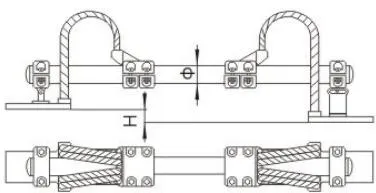
The model, the tube column and the Ø column all carry the outside diameter. The Ø column adds nothing — the only information in the row beyond the model number is the inside diameter in the model itself, and from that, the wall.
Walls: 3 mm on the 70, 3 mm on the 80/74, 5 mm on the 90/80 and 100/90, 4 mm on the 120/112, 7 mm on the 130/116 and 150/136. The tube body is not dimensioned anywhere — no length, no flange, no bolt pattern, no weight.
The Same Tube Has Two Walls On This Site
Cross-check the outside diameters against the aluminium tubular busbar sheet and two of them disagree:
| O.D. | Bore on the busbar sheet | Bore on this sheet |
|---|---|---|
| 80 | 72 | 74 |
| 120 | 110 | 112 |
| 70 | 64 | 64 |
| 90 | 80 | 80 |
| 100 | 90 | 90 |
| 130 | 116 | 116 |
| 150 | 136 | 136 |
Four of the seven agree. 80/74 against 80/72 and 120/112 against 120/110 are 2 mm apart — a 3 mm wall against a 4 mm one, and a 4 mm wall against a 5 mm one.
A transition fitting clamps or sleeves the tube, so the bore has to match the tube that arrives. A 2 mm error is enough for a mismatch on site. If the project uses an 80 or a 120 tube, confirm the wall with us before the fitting and the tube are ordered on separate purchase orders — one of the two sheets is out, and this page cannot tell you which.
The Z Series Prints Nothing But The Size
KLMG-130/116Z, 150/136Z, 170/156Z, 200/180Z, 250/230Z — five rows, one column each. No Ø, no dimensions, no weight.
Two of them duplicate a plain model exactly: 130/116 and 150/136 appear both with and without the Z suffix, at the same tube size. So Z is not a size variant.
Z is a different transition geometry on the same tube size, not a finish or a material: the body is longer and the angle is cut for the run it is made for. Never order a Z model by substituting the plain one of the same tube size — send the run and the drawing states the angle.
The Z series is also the only place the larger tubes appear: 170/156, 200/180 and 250/230 are on this page and not in table 1, so for a 200 mm tube there is a Z fitting and no plain one.
KMGSJ Is A Quotation, Not A Catalogue Item
Table 2 changes prefix to KMGSJ and covers 70, 80, 90, 100 and 130 mm — it skips the 120 and 150 that table 1 has.
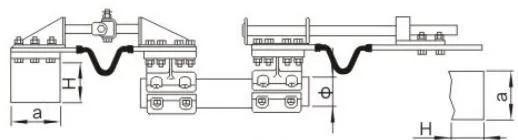
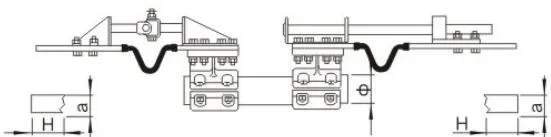
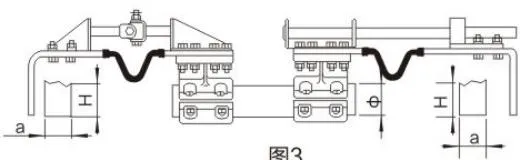
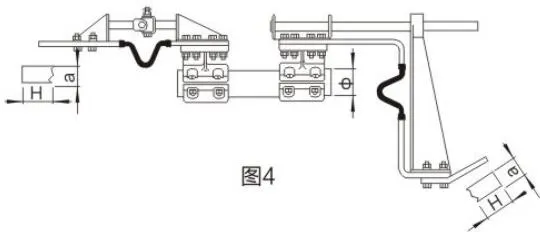
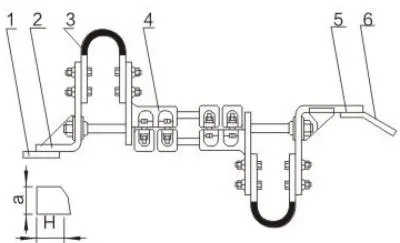
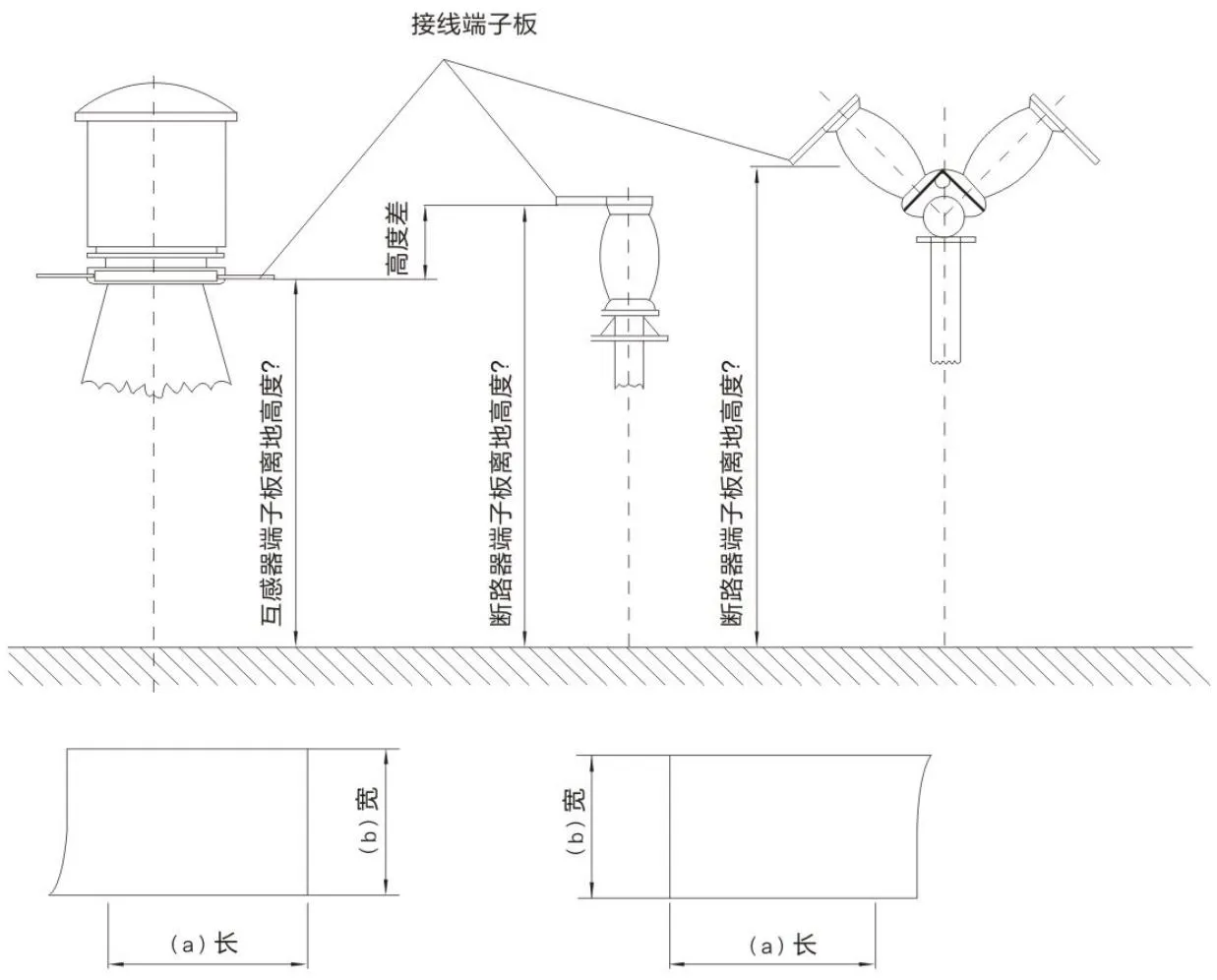
The dimension columns a and H are empty on all five rows, and the cell that would hold them carries a note instead: “User must provide dimensional specifications: Items (1) and (5) require current rating, terminal pad direction, and height above ground.”
So KMGSJ is a fabricated item priced after the layout is known. Three things have to come from the project before it can be quoted: the current rating, the direction the terminal pad faces, and the height above ground. The note refers to items (1) and (5) of a drawing, so the drawing is needed as well as the table.
If the job is a standard cross-road transition, table 1 is the one to order from. If the geometry is fixed by an existing structure, KMGSJ is the one that gets made to suit.
What Is Missing Across All Three
- No weight on any of the 17 rows — nothing can be freighted or priced per kilo.
- No bolt sizes, no flange dimensions, no terminal pad size — the three things a transition fitting is installed by.
- No material or finish — no alloy, no galvanising specification, though the fitting is outside and carries current.
- No current rating — which the KMGSJ note expects the customer to supply, so presumably the same applies to the rest.
Technical Parameters
| Model | Tubular Busbar O.D./I.D. (mm) | Main Dimension Ø (mm) |
|---|---|---|
| KLMG-70/64 | 70/64 | 70 |
| KLMG-80/74 | 80/74 | 80 |
| KLMG-90/80 | 90/80 | 90 |
| KLMG-100/90 | 100/90 | 100 |
| KLMG-120/112 | 120/112 | 120 |
| KLMG-130/116 | 130/116 | 130 |
| KLMG-150/136 | 150/136 | 150 |
| Model | Tubular Busbar O.D. (mm) | Main Dimensions (mm) | |
|---|---|---|---|
| a | H | ||
| KMGSJ-70 | 70 | User must provide dimensional specifications: Items (1) and (5) require current rating, terminal pad direction, and height above ground. | |
| KMGSJ-80 | 80 | ||
| KMGSJ-90 | 90 | ||
| KMGSJ-100 | 100 | ||
| KMGSJ-130 | 130 | ||
| Model | Tubular Busbar O.D./I.D. (mm) |
|---|---|
| KLMG-130/116Z | 130/116 |
| KLMG-150/136Z | 150/136 |
| KLMG-170/156Z | 170/156 |
| KLMG-200/180Z | 200/180 |
| KLMG-250/230Z | 250/230 |
Related Pages
The tubes these transition from: aluminum tubular busbar. Spacers and supports for the same tubes: JS double busbar spacer, YH composite busbar ring. Setting-out of a complete busbar run: tubular busbar fittings schematic.
Note: Seventeen models in three tables. In table 1 the Ø column repeats the outside diameter that is already in the model, so the bore is the only new information; no length, flange, bolt pattern or weight is printed anywhere. The 80 mm tube prints bore 74 here against 72 on the busbar sheet, and the 120 mm prints 112 against 110 — a 2 mm wall difference on two sizes, which matters because the fitting clamps the tube. The Z series has no dimensions and no stated meaning, and duplicates 130/116 and 150/136 at the same size. Table 2 changes prefix to KMGSJ, covers five sizes only, and requires the current rating, terminal pad direction and height above ground from the customer before quotation.