NXJG-C Wedge Insulated Strain Clamp
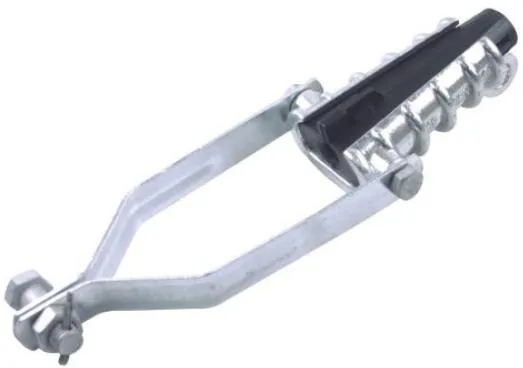
The NXJG-C does what the plain NXJG needs two model sets to do: one order code, both voltage classes. Four bodies cover 35 to 240 mm², and the 1 kV and 10 kV columns sit side by side on the same row, because the only thing that changes between the two is which nylon wedge core goes in. If your stores keep both voltage classes of JKLYJ cable, this is the clamp that halves the body count on the shelf.
Technical Parameters
| Model | Applicable Conductor (mm2) | Overhead Insulated Aluminum Conductor / 1kV | Overhead Insulated Aluminum Conductor / 10kV | Grip Force (kN) | Nominal Failure Load (kN) | ||
|---|---|---|---|---|---|---|---|
| Conductor OD (mm) | Wedge Core | Conductor OD (mm) | Wedge Core | ||||
| NXJG-1C | 35 | 9.8 | 1kV/35 | 15.8 | 10kV/35 | 3.4 | 7.5 |
| 50 | 11.2 | 1kV/50 | 17.1 | 10kV/50 | 4.6 | ||
| NXJG-2C | 70 | 12.8 | 1kV/70 | 18.8 | 10kV/70 | 6.7 | 14.5 |
| 95 | 14.8 | 1kV/95 | 20.4 | 10kV/95 | 8.9 | ||
| NXJG-3C | 120 | 16.2 | 1kV/120 | 21.8 | 10kV/120 | 11.3 | 22.1 |
| 150 | 18.2 | 1kV/150 | 23.4 | 10kV/150 | 13.7 | ||
| NXJG-4C | 185 | 20.2 | 1kV/185 | 25.0 | 10kV/185 | 17.3 | 36.4 |
| 240 | 22.6 | 1kV/240 | 27.2 | 10kV/240 | 22.5 | ||
Note: Body cast in high-strength aluminum alloy with no magnetic hysteresis loss. Wedge core in high-strength reinforced nylon for insulation performance. Cable installs without stripping. Wedge structure keeps fitting simple and reliable. Dimensions may vary slightly with manufacturing tolerance.
Four Bodies, Sixteen Cores
The table looks like eight conductor sizes, but it is really four castings and sixteen wedge cores. Each body takes two conductor sections at each voltage class:
- NXJG-1C — 35 and 50 mm², cores
1kV/35,1kV/50,10kV/35,10kV/50 - NXJG-2C — 70 and 95 mm², cores
1kV/70,1kV/95,10kV/70,10kV/95 - NXJG-3C — 120 and 150 mm², cores
1kV/120,1kV/150,10kV/120,10kV/150 - NXJG-4C — 185 and 240 mm², cores
1kV/185,1kV/240,10kV/185,10kV/240
Buy one body and four cores and you have covered both voltage classes for two conductor sizes. That is the whole argument for the C variant: four castings instead of eight, and a core bin instead of a second parts catalogue.
The core is not interchangeable across the voltage column. A 1 kV 120 mm² cable measures 16.2 mm over the insulation; the 10 kV cable of the same conductor measures 21.8 mm. A 5.6 mm difference, and the 1kV/120 core will not hold the 10 kV cable. The stamp on the core — voltage class first, section second — is the only thing standing between a correct joint and a pull-out, so read it at the pole.
Where the two catalogues disagree by 0.1 kN. NXJG-3C is rated 22.1 kN here against 22.0 kN on the plain NXJG sheet for the same body and the same conductor range. It is a rounding difference between two printings, not two products. Quote either; we build to the tested value on the type-test report.
What the C Variant Buys You on the Shelf
Four castings stand in for what the plain NXJG does with two full model sets. On a utility that keeps both voltage classes — and most do, because the 1 kV drops run out of the same depot as the 10 kV mains — that is four body numbers to shelve instead of eight, and one core bin instead of two catalogues.
The nylon core is the part doing the real work. It is a reinforced nylon moulding, not aluminium, so it presses on the insulation without cutting it. That is what lets the cable go in as delivered: no stripping, no bare metal at the joint, and no separate insulation cover to fit afterwards and get wrong on a pole at 5 pm.
Material and Finish
- Body: high-strength cast aluminum alloy, no magnetic hysteresis loss
- Wedge core: high-strength reinforced nylon, insulating
- Hardware: hot-dip galvanized steel
- Galvanizing: ISO 1461 / ASTM A153 / IEC 61284, minimum coating 65 μm
- Tolerance: ±0.5 mm on the wedge seat and mounting interface
- Inspection: dimensional check, coating thickness to ISO 2178, grip test on samples; mill test certificates on request
Choosing Between the NXJG Variants
The plain NXJG clevis clamp splits the two voltage classes into separate model numbers — better if your specifications call out a 10 kV clamp by name and you want the paperwork to match. The NXJL tie-rod clamp carries this same body range on a tension rod instead of a clevis. For steel-cored JKLGYJ cable, the NXG clevis clamp is cut for that conductor and reaches to 300 mm².