Q QP Ball Eye
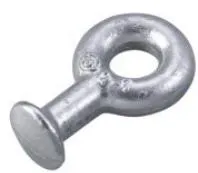
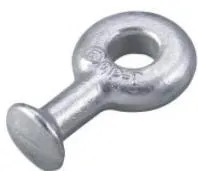
Models: Q-7 – QP-3280 · Nominal Failure Load: 70–320 kN · Reference Weight: 0.3–1.2 kg · Ball D: 33.3–49.0 mm · Eye hole Φ: 20–39 mm
Two Ends, Two Jobs
The ball eye is the part that goes into the bowl of a socket clevis. It has a ball on a stem at one end and an eye at the other:
| Dimension | What it is |
|---|---|
| D | ball diameter — the part that sits in the socket |
| D1 | stem diameter behind the ball |
| Φ | eye hole — what the next fitting’s pin goes through |
| b | thickness of the eye |
| H | length from the eye centre down to the top of the ball |
The Ball Only Comes in Three Sizes
Sixteen catalogue lines, and D takes exactly three values, with the coupling marking following it:
| Ball D | Stem D1 | Coupling mark | Rated lines |
|---|---|---|---|
| 33.3 mm | 17 mm | 16 | 70, 100, 120 kN |
| 41.0 mm | 21 mm | 20 | 160, 210 kN |
| 49.0 mm | 25 mm | 24 | 200, 250, 300, 320 kN |
The ball is not a strength dimension — it is a mating dimension. A QP-20 at 200 kN and a QP-30 at 300 kN use the same 49 mm ball, while the 210 kN QP-21D uses the smaller 41 mm one. So a 210 kN ball eye will not go into the socket that takes a 200 kN ball eye.
That is the classic mistake on this part: buying by the load number and finding the ball is the wrong size for the clevis in the store. Check D against the clevis marking 16 / 20 / 24 first, then the rating.
What Carries the Load
Φ and b do:
| Φ | b | Weight | |
|---|---|---|---|
| QP-7 | 20 | 16 | 0.3 kg |
| QP-16 | 26 | 20 | 0.5 kg |
| QP-20 | 26 | 24 | 1.0 kg |
| QP-30 | 39 | 28 | 1.1 kg |
| QP-3280 | 33 | 28 | 1.2 kg |
The eye hole opens from 20 to 39 mm and the ring thickens from 16 to 28 mm across the range — that is where the 70 to 320 kN comes from. Everything in this family is light: the heaviest is 1.2 kg, because there is very little material in a ball and a ring.
Q and QP: 2 mm of Eye Hole
| Φ | b | H | D | Load | Weight | |
|---|---|---|---|---|---|---|
| Q-7 | 22 | 16 | 50 | 33.3 | 70 kN | 0.3 kg |
| QP-7 | 20 | 16 | 50 | 33.3 | 70 kN | 0.3 kg |
| QP-10 | 20 | 16 | 50 | 33.3 | 100 kN | 0.3 kg |
The Q and QP prefixes differ by the eye hole — 22 against 20 mm — and nothing else. Note also that QP-7 and QP-10 are the same casting with 70 and 100 kN on the label; the same 0.3 kg covers both.
Two Numbering Systems That Do Not Agree
The lower seven lines carry general design numbers instead of QP numbers, and the pairs are not always the same part:
| Rating | Model line | Design line | Difference |
|---|---|---|---|
| 70 kN | QP-7, b 16 | QP-0750, b 16 | same, 0.3 kg both |
| 100 kN | QP-10, b 16 | QP-1050, b 16 | same, 0.3 kg both |
| 120 kN | QP-12, b 16, 0.5 kg | QP-1260, b 16, 0.4 kg | weight only |
| 160 kN | QP-16, b 20 | QP-1660, b 18 | 2 mm of eye |
| 210 kN | QP-21D, H 70, Φ 30, b 24 | QP-2180, H 80, Φ 26, b 20 | different part |
| 300 / 320 kN | QP-30, Φ 39 | QP-3280, Φ 33 | 6 mm of eye hole |
The 120 kN pair also has a third variant, QP-12G: same Φ 24 and H 60 as QP-12 but b = 18 instead of 16 — and it prints 0.4 kg against 0.5. The G ring is the same eye on a thicker section, so quote it by the code and carry its own 0.4 kg for freight.
Technical Parameters
| Universal Design Model | Model | Main Dimensions (mm) | Connection Marking | Nominal Failure Load(kN) | Reference Weight (kg) | ||||
|---|---|---|---|---|---|---|---|---|---|
| Φ | b | H | D | D1 | |||||
| Q-7 | 22 | 16 | 50 | 33.3 | 17 | 16 | 70 | 0.3 | |
| QP-7 | 20 | 16 | 50 | 33.3 | 17 | 16 | 70 | 0.3 | |
| QP-10 | 20 | 16 | 50 | 33.3 | 17 | 16 | 100 | 0.3 | |
| QP-12 | 24 | 16 | 60 | 33.3 | 17 | 16 | 120 | 0.5 | |
| QP-12G | 24 | 18 | 60 | 33.3 | 17 | 16 | 120 | 0.4 | |
| QP-16 | 26 | 20 | 60 | 41.0 | 21 | 20 | 160 | 0.5 | |
| QP-20 | 26 | 24 | 80 | 49.0 | 25 | 24 | 200 | 1.0 | |
| QP-21D | 30 | 24 | 70 | 41.0 | 21 | 20 | 210 | 0.9 | |
| QP-30 | 39 | 28 | 80 | 49.0 | 25 | 24 | 300 | 1.1 | |
| QP-0750 | 20 | 16 | 50 | 33.3 | 17 | 16 | 70 | 0.3 | |
| QP-1050 | 20 | 16 | 50 | 33.3 | 17 | 16 | 100 | 0.3 | |
| QP-1260 | 24 | 16 | 60 | 33.3 | 17 | 16 | 120 | 0.4 | |
| QP-1660 | 26 | 18 | 60 | 41.0 | 21 | 20 | 160 | 0.5 | |
| QP-2180 | 26 | 20 | 80 | 41.0 | 21 | 20 | 210 | 0.7 | |
| QP-2580 | 30 | 24 | 80 | 49.0 | 25 | 24 | 250 | 1.0 | |
| QP-3280 | 33 | 28 | 80 | 49.0 | 25 | 24 | 320 | 1.2 | |
Related Pages
Long-neck version: QH ball eye. With the ball lock published: QPJ, QSJ. Ball with a fork instead of an eye: QS ball clevis. The part it mates with: W socket clevis, WS socket clevis.
Note: D takes only three values — 33.3, 41.0 and 49.0 mm — matched to the socket clevis markings 16, 20 and 24. The 200 kN and 300 kN share the 49 mm ball; the 210 kN uses the 41 mm one. Choose the ball by what it mates with, then the eye by the load. QP-12G prints a thicker ring at a lower weight than QP-12.