WS Socket Clevis
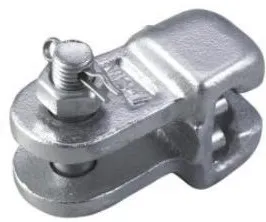
Models: WS-7 – WS-32110 · Nominal Failure Load: 70–320 kN · Reference Weight: 0.97–5.70 kg · Fork gap C: 18–36 mm · Bolt M: 16–36 mm
The Bolted Bottom
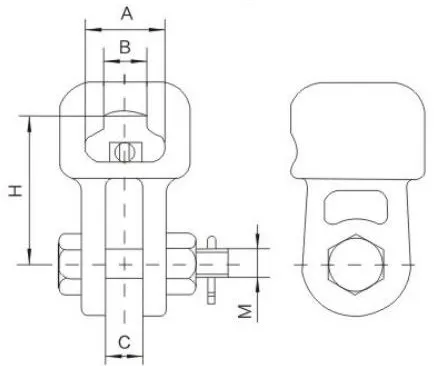
The bowl on top is the same idea as the W socket clevis: A across the outside, B across the mouth, and the ball of the mating ball-eye drops in and is locked through the side slots.
The bottom is what makes this a WS. Instead of a solid eye it is a fork:
- C is the gap between the two cheeks — the width of the tongue that goes in.
- M is the bolt that closes it, and there is a nut and a cotter on the drawing.
So a WS does not need a separate pin: the bolt is part of the fitting. That is also why the table has no b column — there is no single thickness to give, the load goes through two cheeks and a bolt.
Three Bowls Again
A and B take only three values on this page, and the coupling marking follows them exactly:
| Bowl | A | B | Mark | Lines |
|---|---|---|---|---|
| Small | 34.5 mm | 19.2 mm | 16 | 70, 100, 120 kN |
| Medium | 42.5 mm | 23.0 mm | 20 | 160, 200, 210 kN |
| Large | 51.0 mm | 27.5 mm | 24 | 250, 320 kN |
Six of the seven WS numbers sit on the first two bowls. Only the 320 kN gets the large one, and the 250 kN design number shares it.
WS-20D: Lower Rating, Heavier Part
| WS-21 | WS-20D | |
|---|---|---|
| C / H / M | 30 / 100 / 27 | 30 / 100 / 27 |
| A / B | 51.0 / 27.5 | 42.5 / 23.0 |
| Coupling mark | 24 | 20 |
| Rating | 210 kN | 200 kN |
| Weight | 3.20 kg | 3.50 kg |
Same body, same bolt, same length — a smaller bowl, a lower rating and 0.3 kg more. The D is doing something the table does not describe (a different casting, a reinforced fork, a longer thread). Treat it as its own part and ask us for its drawing; do not read it as a de-rated WS-21.
The Weight Steps
0.97 → 1.30 → 1.60 → 2.20 → 3.20 → 5.70 kg across the seven WS numbers. The jump that matters is 3.20 to 5.70 kg: that is where the bowl goes from medium to large and the bolt from 27 to 36 mm. Below that, each 30 kN of rating costs 0.3 to 0.6 kg.
Two Lists That Are Not the Same Parts
Fourteen lines, but only seven WS numbers and seven design numbers — and above 100 kN they are not the same forgings:
| Rating | WS number | Design number | What moves |
|---|---|---|---|
| 70 kN | WS-7, C 18 | WS-0770, C 20 | 2 mm of gap |
| 100 kN | WS-10, C 20, 1.30 kg | WS-1085, C 20, 1.10 kg | weight only |
| 120 kN | WS-12, C 24, H 85 | WS-1290, C 20, H 90 | gap and length |
| 160 kN | WS-16, C 26 | WS-1695, C 22 | 4 mm of gap |
| 210 kN | WS-21, C 30, M 27 | WS-21100, C 24, M 24 | gap and bolt |
| 320 kN | WS-30, C 36, M 36 | WS-32110, C 32, M 30 | gap and bolt |
Up to 100 kN the two lists agree on every dimension. From 120 kN up the design-number fork is 4 to 6 mm narrower, and from 210 kN up the bolt is smaller as well — so WS-21 and WS-21100 are not the same fitting even though both are 210 kN on the same bowl. The 70 kN line is the one place the width runs the other way: the older WS-7 is the narrower fork, 18 against 20 mm, so a 20 mm tongue will not go into it.
Two ratings exist in one list only: WS-20D at 200 kN and WS-25100 at 250 kN. Neither can be quoted from the other numbering system.
The Fork Ladder
The gaps show the split at a glance:
- WS numbers: 18, 20, 24, 26, 30, 30, 36 mm
- Design numbers: 20, 20, 20, 22, 24, 28, 32 mm
The design series climbs in even 2–4 mm steps and stops at 32 mm. The WS series holds 20 mm to 100 kN, then steps 4, 2, 0, 6. If the tongue width is fixed by the rest of your string, the design series gives the finer steps through the middle of the range and the WS series gives the wider forks at the top.
Weight drifts the other way and not in the expected direction: at 100 and 120 kN the design part is 0.2 and 0.5 kg lighter, at 160 and 210 kN it is 0.2 and 0.4 kg heavier, on a narrower fork. Do not price this family from the weight column — ask us to weigh the exact number you are quoting.
Technical Parameters
| Universal Design Model | Model | Main Dimensions (mm) | Connection Marking | Nominal Failure Load(kN) | Reference Weight (kg) | ||||
|---|---|---|---|---|---|---|---|---|---|
| C | H | M | A | B | |||||
| WS-7 | 18 | 70 | 16 | 34.5 | 19.2 | 16 | 70 | 0.97 | |
| WS-10 | 20 | 85 | 18 | 34.5 | 19.2 | 16 | 100 | 1.30 | |
| WS-12 | 24 | 85 | 22 | 34.5 | 19.2 | 16 | 120 | 1.60 | |
| WS-16 | 26 | 95 | 24 | 42.5 | 23.0 | 20 | 160 | 2.20 | |
| WS-21 | 30 | 100 | 27 | 51.0 | 27.5 | 24 | 210 | 3.20 | |
| WS-20D | 30 | 100 | 27 | 42.5 | 23.0 | 20 | 200 | 3.50 | |
| WS-30 | 36 | 110 | 36 | 51.0 | 27.5 | 24 | 320 | 5.70 | |
| WS-0770 | 20 | 70 | 16 | 34.5 | 19.2 | 16 | 70 | 0.97 | |
| WS-1085 | 20 | 85 | 18 | 34.5 | 19.2 | 16 | 100 | 1.10 | |
| WS-1290 | 20 | 90 | 22 | 34.5 | 19.2 | 16 | 120 | 1.10 | |
| WS-1695 | 22 | 95 | 24 | 42.5 | 23.0 | 20 | 160 | 2.40 | |
| WS-21100 | 24 | 100 | 24 | 42.5 | 23.0 | 20 | 210 | 3.60 | |
| WS-25100 | 28 | 100 | 27 | 51.0 | 27.5 | 24 | 250 | 4.30 | |
| WS-32110 | 32 | 110 | 30 | 51.0 | 27.5 | 24 | 320 | 5.70 | |
Related Pages
Solid-eye version: W socket clevis. Same fork with the locking holes published: WSJ. Long body: WS extended type. Stirrup bottom: WSY.
Note: C is the fork gap and M the bolt — the bolt is part of the fitting, so no separate pin is needed and the table carries no b. WS-20D is 0.3 kg heavier than WS-21 on a smaller bowl and a lower rating. Above 100 kN the design-number fork is 4 to 6 mm narrower than the WS fork at the same rating, and from 210 kN up its bolt is smaller too.