YL YLP Extension Rod
Models: YL-1012 – YLP-25935 (22 rows in two tables) · Load: 70–250 kN · Length: 120–990 mm

The Model Number Is The Load And The Length
Four digits, two facts:
YL-1012 → 100 kN, 120 mm · YL-1643 → 160 kN, 430 mm · YLP-25935 → 250 kN, 935 mm
The first pair of digits is the nominal failure load in tens of kilonewtons, the second pair the length in tens of millimetres. It holds on all thirteen YL rows and all eight YLP rows — twenty-one out of twenty-two, with the one exception explained below.
So you can size a rod without the table: pick the load, then the length, and read the code. Two rods with the same first pair carry the same rating whatever their length — YL-2043 and YL-2155 are both 200 and 210 kN class, and YL-1069 is 100 kN at 690 mm, the longest of that rating.
That is worth knowing when a project specifies “a 160 kN rod about 550 long”: it is YL-1655, and there is no need to look it up.
The Weight Column Is A Solid Steel Rod
For the long YLP rods the weight rises linearly with length, which lets the material be identified:
| Rod | Length | Weight | Slope |
|---|---|---|---|
| YLP-16850 | 850 mm | 3.7 kg | — |
| YLP-16990 | 990 mm | 4.3 kg | 0.0043 kg per mm |
| YLP-25855 | 855 mm | 6.2 kg | — |
| YLP-25935 | 935 mm | 6.7 kg | 0.0063 kg per mm |
A solid steel rod of Φ26 weighs 0.00417 kg per millimetre; Φ33 weighs 0.0067. The measured slopes are 0.0043 and 0.0063 — within 7 per cent of solid steel on both.
So the body is a solid rod at roughly 7.85 g/cm³, not a tube, and d is not a bore. On every row d sits 2 to 4 mm under Φ — Φ26 with d22, Φ30 with d24, Φ33 with d30 — which is a threaded end, not a wall.
That changes how the part is read: these are solid steel extension rods, and the weight is set by Φ and L almost entirely. The short rods sit slightly above the line (0.3 to 0.6 kg over on a 260 to 430 mm rod), which is the end fittings — the eye and the clevis — carried as a constant.
Two Rows Repeat The Weight Of The Row Above
Two pairs sit off the 0.0043 kg/mm slope, and in both the second row prints the figure of the first:
| Model | Φ | L | Printed | Expected from the slope |
|---|---|---|---|---|
| YL-1640 | 26 | 400 mm | 1.75 kg | 1.75 kg |
| YL-1643 | 26 | 430 mm | 1.75 kg | 1.88 kg |
| YL-2155 | 30 | 550 mm | 3.1 kg | 3.1 kg |
| YL-2165 | 30 | 650 mm | 3.1 kg | 3.5 kg |
YL-1643 is 30 mm longer than YL-1640 and prints the same weight. YL-2165 is 100 mm longer than YL-2155 and prints the same weight. A hundred millimetres of Φ30 steel is 0.4 kg on its own.
The third row in the first pair is a further check: YL-1243 is Φ24 at 430 mm and also prints 1.75 kg, so three different rods share one figure across two diameters and two lengths.
For YL-1643 and YL-2165 use 1.88 and 3.5 kg, the figures their length and section give. We weigh one if the freight turns on it.
YL-07430 Is Written Backwards
The last row of the first table has its General Design Model cell filled with YL-07430 and its Model cell empty — the two are transposed, which is why the row looks like it has no model.
The code itself is a third format. Five digits, not four: 07 = 70 kN, then 430 as a plain length in millimetres rather than tens of millimetres. It is the only rod below 100 kN on the sheet, and the only one written this way.
If a project calls for a 70 kN rod, quote it as YL-07430 and confirm the format with us — a supplier searching for a four-digit code will not find it.
YL And YLP Are Two Shapes, Not Two Lengths
The two tables are not a length split. Both cover long and short:
- YL runs 120 to 690 mm at 70, 100, 120, 160, 200 and 210 kN.
- YLP runs 260 to 990 mm at 160 and 250 kN only.
YLP offers just two ratings, both of which overlap YL, and reaches lengths YL does not. The model names are otherwise built identically, so the prefix is the shape — the two are different end fittings or a different body form, and the table does not say which.
What it does show is that a 160 kN rod comes in both: YL-1643 at 430 mm and YLP-16260 at 260 mm, then YLP-16850 through 16990. If the load is 160 kN, both pages apply and the choice is the length and the shape — not the rating.
What Is Missing
- No thread specification — d is printed but not its pitch or class, so the mating nut or clevis cannot be ordered from this page.
- No material grade and no galvanising specification, though the rod is outside and in tension.
- No proof load, no safety factor — nominal failure only.
- No weight tolerance, which matters because the two repeated weights above show the column is not being measured row by row.
Technical Parameters
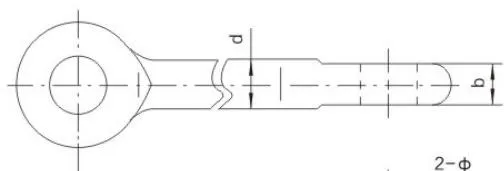
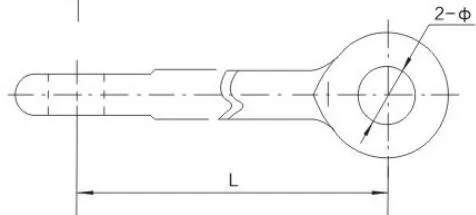
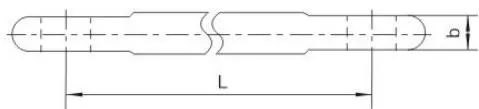
| General Design Model | Model | Main Dimensions(mm) | Nominal Failure Load(kN) | Reference Weight(kg) | |||
|---|---|---|---|---|---|---|---|
| Φ | d | L | b | ||||
| YL-1012 | 20 | 18 | 120 | 16 | 100 | 0.6 | |
| YL-1040 | 20 | 18 | 400 | 16 | 100 | 1.1 | |
| YL-1050 | 20 | 18 | 500 | 16 | 100 | 1.4 | |
| YL-1066 | 20 | 18 | 660 | 16 | 100 | 1.7 | |
| YL-1069 | 20 | 18 | 690 | 16 | 100 | 1.9 | |
| YL-1243 | 24 | 22 | 430 | 18 | 120 | 1.75 | |
| YL-1640 | 26 | 22 | 400 | 18 | 160 | 1.75 | |
| YL-1643 | 26 | 22 | 430 | 18 | 160 | 1.75 | |
| YL-1655 | 26 | 22 | 550 | 18 | 160 | 2.5 | |
| YL-1657 | 26 | 22 | 570 | 18 | 160 | 2.7 | |
| YL-2043 | 30 | 24 | 430 | 20 | 200 | 3.0 | |
| YL-2155 | 30 | 26 | 550 | 20 | 210 | 3.1 | |
| YL-2165 | 30 | 26 | 650 | 20 | 210 | 3.1 | |
| YL-07430 | 18 | 18 | 430 | 16 | 70 | 1.5 | |
| Model | Main Dimensions(mm) | Nominal Failure Load(kN) | Reference Weight(kg) | |||
|---|---|---|---|---|---|---|
| Φ | d | L | b | |||
| YLP-16260 | 26 | 24 | 260 | 20 | 160 | 1.6 |
| YLP-16850 | 26 | 24 | 850 | 20 | 160 | 3.7 |
| YLP-16910 | 26 | 24 | 910 | 20 | 160 | 3.9 |
| YLP-16970 | 26 | 24 | 970 | 20 | 160 | 4.1 |
| YLP-16990 | 26 | 24 | 990 | 20 | 160 | 4.3 |
| YLP-25855 | 33 | 30 | 855 | 30 | 250 | 6.2 |
| YLP-25915 | 33 | 30 | 915 | 30 | 250 | 6.6 |
| YLP-25935 | 33 | 30 | 935 | 30 | 250 | 6.7 |
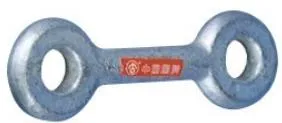
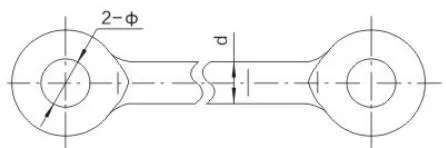
Related Pages
Fittings the rods attach to: GD attachment point fitting, QY and QP towing plate, DB adjusting plate. Yoke plates: BL, BN, BN1.
Note: Twenty-two rods in two tables. The model is load in tens of kN followed by length in tens of mm on twenty-one rows; YL-07430 is a five-digit variant with the length in plain millimetres, and its model and general-design cells are transposed. The weight rises at 0.0043 and 0.0063 kg/mm on the YLP families, which matches a solid steel rod at 7.85 g/cm3 within 7 per cent — so the body is solid and d is a threaded end, not a bore. YL-1643 and YL-2165 both repeat the weight of the row above them, 30 and 100 mm shorter; YL-1243 prints the same 1.75 kg across a different diameter and length. YLP covers only 160 and 250 kN. No thread pitch, material grade, galvanising or proof load printed.