MGS Tubular Busbar Expansion Joint
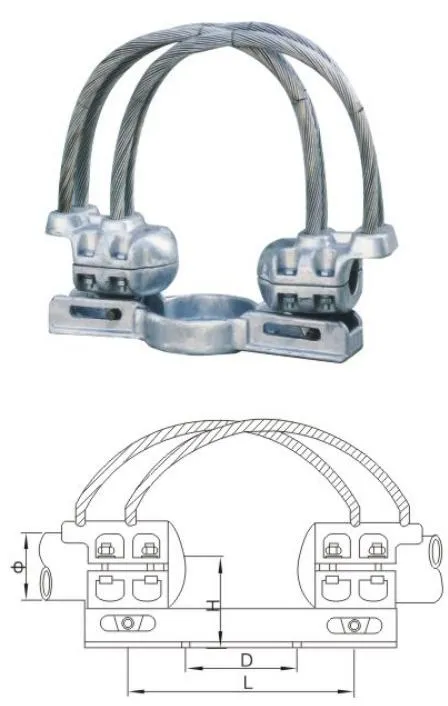
Models: 20 sizes · Reference Weight: 32.6–60 kg · Function: expansion joint on its own support foot
Ten Times a Clamp
These weights are not clamp weights. A MGG fixed clamp at 100 mm is 4.7 kg; MGS-100 is 37.3 kg. This is a complete expansion assembly — the sliding element, its housing, and the support foot under it — supplied as one item.
That matters for two reasons: it is a lifting item on site, and it is a point load on the structure far bigger than the clamps either side of it.
Three Sizes, One Body
MGS-50, MGS-60 and MGS-70 all print 32.6 kg. Then the weight steps: 80 → 35.5, 90 → 36.5, 100 → 37.3.
Three bores on one body is normal — the casting is the same and only the bore changes. What is worth noticing is that the table does not say so anywhere, and the weight does not hint at where the body changes on the rest of the list.
A Bigger Foot That Weighs Less
| Model | Foot D | Weight |
|---|---|---|
| MGS-120 | 140 mm | 43.5 kg |
| MGS-120(225) | 225 mm | 42.5 kg |
| MGS-130 | 140 mm | 45.0 kg |
| MGS-130(225) | 225 mm | 46.0 kg |
At 130 mm the bigger foot is 1.0 kg heavier. At 120 mm it is 1.0 kg lighter, because the foot is a separate casting and the two columns are not one body with a wider base: the 225 foot is shallower at the 120 bore and deeper at 130. The weight in each column is the weighed weight of that part, so cost the row you are ordering.
The 250 Foot Adds 30 mm of Length
L is the overall length, and the three feet behave differently:
| Bore | D 140 | D 225 | D 250 |
|---|---|---|---|
| 100 mm | 400 | 400 | — |
| 130 mm | 450 | 450 | — |
| 150 mm | — | 450 | 480 |
| 170 mm | — | 500 | 530 |
| 200 mm | — | 500 | 530 |
| 250 mm | — | — | 560 |
The 225 mm foot changes the anchor pattern but not the length. The 250 mm foot adds exactly 30 mm at every size — three rows, three times 30. So if you are checking whether the joint will fit between two fixed points, the foot size is part of the length.
H, by contrast, depends only on the bore: 90 mm at 50, and 250 mm at 250, the same on every foot.
Technical Parameters
| Model | Tubular Busbar O.D. (mm) | Main Dimensions (mm) | Reference Weight (kg) | |||
|---|---|---|---|---|---|---|
| Ø | D | L | H | |||
| MGS-50 | 50 | 50 | 140 | 350 | 90 | 32.6 |
| MGS-60 | 60 | 60 | 140 | 350 | 100 | 32.6 |
| MGS-70 | 70 | 70 | 140 | 350 | 110 | 32.6 |
| MGS-80 | 80 | 80 | 140 | 350 | 115 | 35.5 |
| MGS-90 | 90 | 90 | 140 | 400 | 125 | 36.5 |
| MGS-100 | 100 | 100 | 140 | 400 | 135 | 37.3 |
| MGS-110 | 110 | 110 | 140 | 400 | 145 | 40.5 |
| MGS-120 | 120 | 120 | 140 | 450 | 145 | 43.5 |
| MGS-130 | 130 | 130 | 140 | 450 | 155 | 45.0 |
| MGS-100(225) | 100 | 100 | 225 | 400 | 135 | 38.3 |
| MGS-110(225) | 110 | 110 | 225 | 400 | 145 | 41.5 |
| MGS-120(225) | 120 | 120 | 225 | 450 | 145 | 42.5 |
| MGS-130(225) | 130 | 130 | 225 | 450 | 155 | 46.0 |
| MGS-150(225) | 150 | 150 | 225 | 450 | 160 | 47.5 |
| MGS-170(225) | 170 | 170 | 225 | 500 | 180 | 50.0 |
| MGS-200(225) | 200 | 200 | 225 | 500 | 210 | 52.5 |
| MGS-150(250) | 150 | 150 | 250 | 480 | 160 | 49.0 |
| MGS-170(250) | 170 | 170 | 250 | 530 | 180 | 52.3 |
| MGS-200(250) | 200 | 200 | 250 | 530 | 210 | 57.0 |
| MGS-250(250) | 250 | 250 | 250 | 560 | 250 | 60.0 |
Related Fittings
Flexible joint without a foot: MGS section joint. Joint on the Z frame: MGSS-A. Expansion clamps without a foot: MGGD, MDS. Supports either side: MGG, MGG1.
Note: 32 to 60 kg per piece — a lifting and point-load item. The 250 foot adds 30 mm to L; the 225 foot does not. MGS-120 prints lighter on the bigger foot, which is flagged.