JC Clamp
Models: JC-1-11 – JC-6-67 and JC-01 – JC-042 · Conductor: 7–28 mm OD · Tables: 7
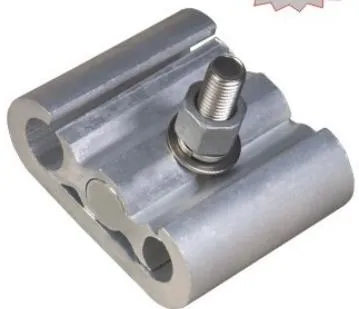
A Selection Matrix, Not A Dimension Sheet
There is not a single dimension on this page. What you get instead is seven lookup tables that answer one question: given two conductors, which clamp joins them?
Every table is laid out the same way. The column is the branch conductor, the row is the main conductor, and the cell holds the model number. Empty cells mean the combination is not offered.
That is the right tool for the job — a two-conductor clamp has to fit both conductors at once, and a table of diameters would leave you doing the arithmetic. But it means you cannot order from this page without knowing both conductors, and you cannot find a dimension for any model on it.
Two Naming Schemes
The seven tables use two different model formats:
JC-1-11toJC-6-67— tables 1 to 4, the conductor families JKLYJ, LJ(TJ), JKLGYJ and LGJ up to 240 mm².JC-01,JC-02,JC-031,JC-032,JC-041,JC-042— tables 5 to 7, the 300 and 400 mm² conductors.
The two are not related. A JC-2-23 and a JC-02 are different products from different series, and the second is not a shorthand for the first. Read the format before you read the number.
Within the first scheme the first digit tracks the branch size class — 1 for 35–50, 2 for 70–95, 3 for 120, 4 for 150, 5 for 185, 6 for 240 — and the second digit distinguishes clamps within that class, each covering a different main conductor. So JC-2-21 and JC-2-22 are the same branch size and different main sizes.
Four Tables For Four Conductor Families
Tables 1 to 4 are the same 8 × 8 grid, once for each family:
| Table | Family | Insulated | Steel core |
|---|---|---|---|
| 1 | JKLYJ | yes | no |
| 2 | LJ / TJ | no | no |
| 3 | JKLGYJ | yes | yes |
| 4 | LGJ | no | yes |
The conductor diameters differ slightly between them for the same nominal area — a JKLYJ-120 is 13.0 mm, an LJ-120 is 14.25 and an LGJ-120/20 is 15.07 — so a clamp that suits one family does not automatically suit another of the same square millimetres. That is why there are four tables and not one.
Find your family first, then your two conductors. Using the JKLYJ table for an LGJ conductor gives a clamp that is one size too small.
The Empty Diagonal In Tables 5 To 7
The 300 and 400 mm² matrices do not tile cleanly.
- Table 5 — main LGJ-300, branch LGJ-70 to LGJ-150.
- Table 6 — main LGJ-300, branch LGJ-150 to LGJ-300.
- Table 7 — main LGJ-400, branch LGJ-300 to LGJ-400.
Between them they cover main 300 against most branches and main 400 against the larger branches. Two gaps follow:
Main LGJ-400 against a branch below 300 mm² has no table at all. If you are tapping a 150 mm² branch off a 400 mm² run, none of the seven tables will tell you the clamp.
Part of the diagonal in tables 6 and 7 is blank. LGJ-300/20 against LGJ-300/20, LGJ-400/25 against LGJ-400/20, LGJ-400/35 against LGJ-400/25 and LGJ-400/50 against LGJ-400/35 all have empty cells, while neighbouring mismatched pairs are filled in. Some same-size joints simply have no listed clamp.
An empty cell means that pair is not a catalogue combination — never read it as “use the nearest size”. Tell us the two conductors and we will say whether a clamp exists, is a special, or is not made.
Read The Cell, Not The Code
The same model number appears in more than one cell of the same table. JC-3-33 fills two cells in table 1, JC-4-41 two more. One clamp covers a range of conductor pairs, and the matrix is showing you the coverage.
So do not reverse-engineer a clamp from a model number. The diagonal of table 1 reads JC-1-11, JC-1-13, JC-2-23, JC-2-25, JC-3-34, JC-4-44, JC-5-55, JC-6-65 — the second digit is not a count of anything you can rely on, and JC-3-33 is not “size 3 by size 3”. Go the other way: find the cell, take the code.
Technical Parameters
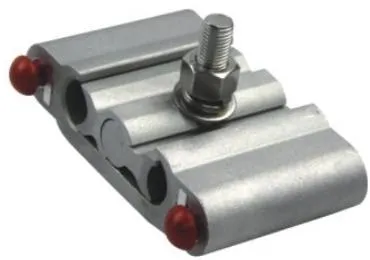
Table 1 — JKLYJ, insulated aluminium, no steel core
| Conductor Specification | JKLYJ-35 | JKLYJ-50 | JKLYJ-70 | JKLYJ-95 | JKLYJ-120 | JKLYJ-150 | JKLYJ-185 | JKLYJ-240 |
|---|---|---|---|---|---|---|---|---|
| Conductor Diameter (mm) | 7 | 8.4 | 10 | 11.6 | 13 | 14.6 | 16.2 | 18.4 |
| JKLYJ-35 | JC-1-11 | JC-1-12 | JC-2-21 | JC-2-22 | JC-3-31 | JC-4-41 | JC-5-51 | JC-6-61 |
| JKLYJ-50 | JC-1-13 | JC-2-22 | JC-2-23 | JC-3-32 | JC-4-41 | JC-5-52 | JC-6-61 | |
| JKLYJ-70 | JC-2-23 | JC-2-24 | JC-3-33 | JC-4-42 | JC-5-52 | JC-6-62 | ||
| JKLYJ-95 | JC-2-25 | JC-3-33 | JC-4-43 | JC-5-53 | JC-6-63 | |||
| JKLYJ-120 | JC-3-34 | JC-4-43 | JC-5-54 | JC-6-63 | ||||
| JKLYJ-150 | JC-4-44 | JC-5-54 | JC-6-64 | |||||
| JKLYJ-185 | JC-5-55 | JC-6-64 | ||||||
| JKLYJ-240 | JC-6-65 |
Table 2 — LJ and TJ, bare aluminium
| Conductor Specification | LJ(TJ)-35 | LJ(TJ)-50 | LJ(TJ)-70 | LJ(TJ)-95 | LJ(TJ)-120 | LJ(TJ)-150 | LJ(TJ)-185 | LJ(TJ)-240 |
|---|---|---|---|---|---|---|---|---|
| Conductor Diameter (mm) | 7.5 | 9 | 10.8 | 12.48 | 14.25 | 15.75 | 17.5 | 20 |
| LJ(TJ)-35 | JC-1-12 | JC-1-13 | JC-2-22 | JC-2-23 | JC-3-32 | JC-4-42 | JC-5-52 | JC-6-62 |
| LJ(TJ)-50 | JC-1-14 | JC-2-23 | JC-2-24 | JC-3-33 | JC-4-42 | JC-5-52 | JC-6-62 | |
| LJ(TJ)-70 | JC-2-24 | JC-2-25 | JC-3-34 | JC-4-43 | JC-5-53 | JC-6-63 | ||
| LJ(TJ)-95 | JC-2-26 | JC-3-34 | JC-4-44 | JC-5-54 | JC-6-63 | |||
| LJ(TJ)-120 | JC-3-35 | JC-4-44 | JC-5-54 | JC-6-64 | ||||
| LJ(TJ)-150 | JC-4-45 | JC-5-55 | JC-6-64 | |||||
| LJ(TJ)-185 | JC-5-56 | JC-6-65 | ||||||
| LJ(TJ)-210 | JC-6-66 | |||||||
| LJ(TJ)-240 |
Table 3 — JKLGYJ, insulated with steel core
| Conductor Specification | JKLGYJ-35 | JKLGYJ-50 | JKLGYJ-70 | JKLGYJ-95 | JKLGYJ-120 | JKLGYJ-150 | JKLGYJ-185 | JKLGYJ-240 |
|---|---|---|---|---|---|---|---|---|
| Conductor Diameter (mm) | 7.75 | 9.12 | 10.83 | 12.93 | 14.32 | 15.84 | 17.96 | 20.52 |
| JKLGYJ-35/6 | JC-1-12 | JC-1-13 | JC-2-22 | JC-2-23 | JC-3-32 | JC-4-42 | JC-5-52 | JC-6-62 |
| JKLGYJ-50/8 | JC-1-14 | JC-2-23 | JC-2-24 | JC-3-33 | JC-4-42 | JC-5-52 | JC-6-62 | |
| JKLGYJ-70/10 | JC-2-24 | JC-2-25 | JC-3-34 | JC-4-43 | JC-5-53 | JC-6-63 | ||
| JKLGYJ-95/15, 95/20 | JC-2-27 | JC-3-34 | JC-4-44 | JC-5-54 | JC-6-64 | |||
| JKLGYJ-120/20, 120/25 | JC-3-35 | JC-4-44 | JC-5-55 | JC-6-64 | ||||
| JKLGYJ-150/20, 150/25 | JC-4-45 | JC-5-56 | JC-6-64 | |||||
| JKLGYJ-185/25, 185/30 | JC-5-57 | JC-6-65 | ||||||
| JKLGYJ-240/30, 240/40 | JC-6-66 |
Table 4 — LGJ, bare ACSR
| Conductor Specification | LGJ-35/6 | LGJ-50/8 | LGJ-70/10 | LGJ-95/15, 95/20 | LGJ-120/20, 120/25 | LGJ-150/25 | LGJ-185/25, 185/30 | LGJ-240/30, 240/40 |
|---|---|---|---|---|---|---|---|---|
| Conductor Diameter (mm) | 8.16 | 9.6 | 11.4 | 13.61, 13.87 | 15.07, 15.74 | 16.67, 17.1 | 18.9, 18.88 | 21.6, 21.66 |
| LGJ-35/6 | JC-1-13 | JC-1-14 | JC-2-23 | JC-2-24 | JC-3-33 | JC-4-42 | JC-5-52 | JC-6-62 |
| LGJ-50/8 | JC-1-14 | JC-2-23 | JC-2-25 | JC-3-33 | JC-4-43 | JC-5-53 | JC-6-63 | |
| LGJ-70/10 | JC-2-25 | JC-2-26 | JC-3-34 | JC-4-43 | JC-5-54 | JC-6-64 | ||
| LGJ-95/15, 95/20 | JC-2-27 | JC-3-35 | JC-4-44 | JC-5-55 | JC-6-64 | |||
| LGJ-120/20, 120/25 | JC-3-36 | JC-4-45 | JC-5-56 | JC-6-65 | ||||
| LGJ-150/20, 150/25 | JC-4-45 | JC-5-57 | JC-6-65 | |||||
| LGJ-185/25, 185/30 | JC-5-57 | JC-6-66 | ||||||
| LGJ-240/30, 240/40 | JC-6-67 |
Table 5 — main LGJ-300 against branch LGJ-70 to 150
| Applicable Conductor (mm2) | LGJ-70/10 (11.4) | LGJ-70/40 (13.60) | LGJ-95/15 (13.61) | LGJ-95/20 (13.87) | LGJ-95/55 (16.0) | LGJ-120/7, 120/20 (14.5, 15.07) | LGJ-120/25 (15.74) | LGJ-150/8 (16.0) | LGJ-150/20 (16.67) | LGJ-150/25 (17.1) |
|---|---|---|---|---|---|---|---|---|---|---|
| LGJ-300/15(23.01) | JC-032 | JC-032 | JC-032 | JC-032 | JC-031 | JC-031 | JC-031 | JC-031 | JC-031 | JC-031 |
| LGJ-300/20(23.43) | JC-032 | JC-032 | JC-032 | JC-032 | JC-031 | JC-031 | JC-031 | JC-031 | JC-031 | JC-031 |
| LGJ-300/25(23.76) | JC-032 | JC-032 | JC-032 | JC-032 | JC-031 | JC-031 | JC-031 | JC-031 | JC-031 | JC-02 |
| LGJ-300/40(23.94) | JC-032 | JC-032 | JC-032 | JC-031 | JC-031 | JC-031 | JC-031 | JC-031 | JC-02 | JC-02 |
| LGJ-300/50(24.26) | JC-032 | JC-031 | JC-031 | JC-031 | JC-031 | JC-031 | JC-031 | JC-031 | JC-02 | JC-02 |
| LGJ-300/70(25.20) | JC-032 | JC-031 | JC-031 | JC-031 | JC-031 | JC-031 | JC-02 | JC-02 | JC-02 | JC-02 |
Table 6 — main LGJ-300 against branch LGJ-150 to 300
| Applicable Conductor (mm2) | LGJ-150/35 (17.5) | LGJ-185/10, 185/25, 185/30 (18.0, 18.9, 18.88) | LGJ-185/45 (19.6) | LGJ-240/30, 240/40, 240/55 (21.6, 21.66, 22.4) | LGJ-300/15 (23.01) | LGJ-300/20 (23.43) | LGJ-300/25 (23.76) | LGJ-300/40 (23.94) | |
|---|---|---|---|---|---|---|---|---|---|
| LGJ-300/15(23.01) | JC-031 | JC-02 | JC-02 | JC-01 | JC-01 | JC-01 | JC-01 | JC-01 | |
| LGJ-300/20(23.43) | JC-02 | JC-02 | JC-02 | JC-01 | JC-01 | JC-01 | JC-01 | ||
| LGJ-300/25(23.76) | JC-02 | JC-02 | JC-02 | JC-01 | JC-01 | JC-01 | |||
| LGJ-300/40(23.94) | JC-02 | JC-02 | JC-02 | JC-01 | JC-01 | ||||
| LGJ-300/50(24.26) | JC-02 | JC-02 | JC-02 | JC-01 | |||||
| LGJ-300/70(25.20) | JC-02 | JC-02 | JC-01 | JC-01 |
Table 7 — main LGJ-400 against branch LGJ-300 to 400
| Applicable Conductor (mm2) | LGJ-300/15, 300/20, 300/25, 300/40, 300/50 (23.01, 23.43, 23.76, 23.94, 24.26) | LGJ-300/70 (25.20) | LGJ-400/20 (26.91) | LGJ-400/25 (26.64) | LGJ-400/35 (26.82) | LGJ-400/50 (27.63) | LGJ-400/65 (28.0) | |
|---|---|---|---|---|---|---|---|---|
| LGJ-400/20(26.91) | JC-042 | JC-042 | JC-041 | JC-041 | JC-041 | JC-041 | JC-041 | |
| LGJ-400/25(26.64) | JC-042 | JC-042 | JC-041 | JC-041 | JC-041 | JC-041 | ||
| LGJ-400/35(26.82) | JC-042 | JC-042 | JC-041 | JC-041 | JC-041 | |||
| LGJ-400/50(27.63) | JC-042 | JC-042 | JC-041 | JC-041 | ||||
| LGJ-400/65(28.00) | JC-042 | JC-041 | JC-041 |
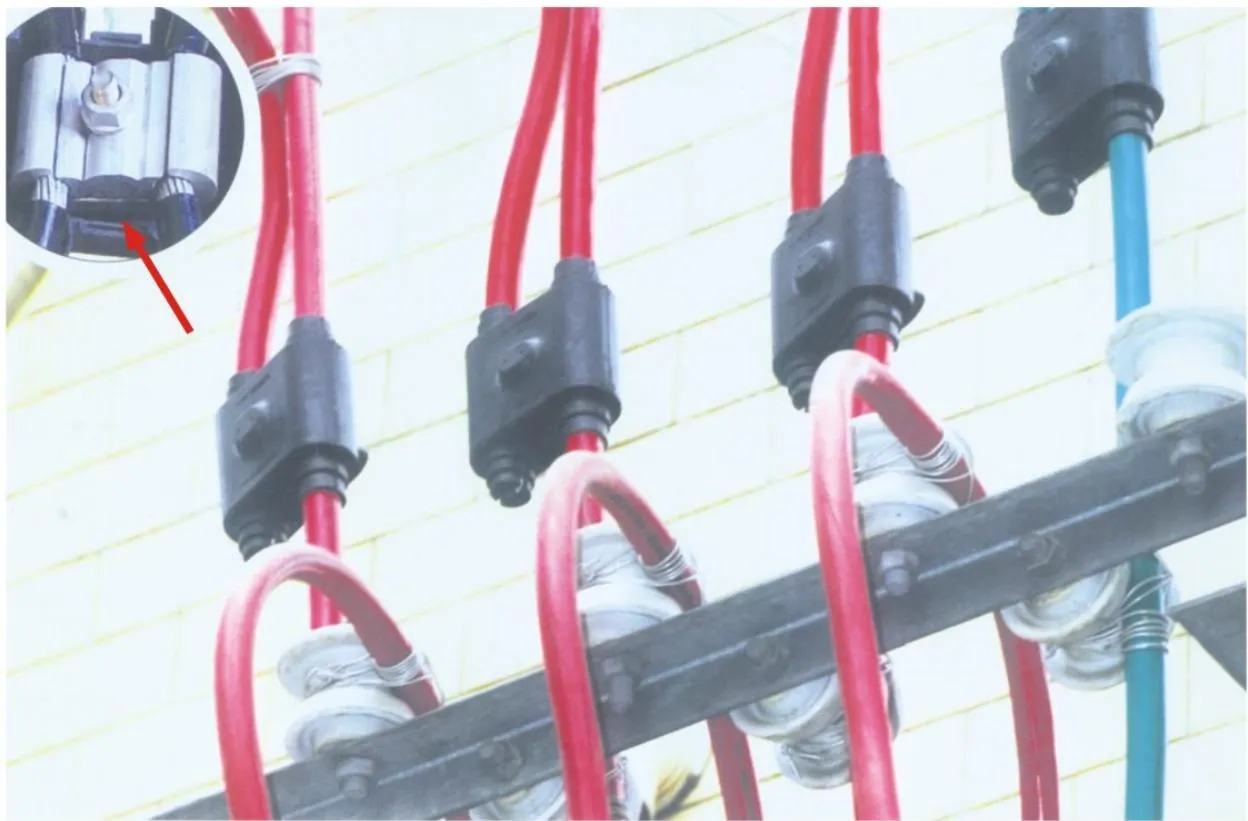
Installation Example
Related Pages
Branch clamps on the same principle: JKG and JKL service clamps. Compression T-taps: JYT jumper clamp, TL T clamp. Transformer terminal clamps: JCB.
Note: Seven lookup matrices and no dimensions anywhere. Column is the branch conductor, row the main; empty cells mean no clamp is listed. Tables 1 to 4 cover JKLYJ, LJ/TJ, JKLGYJ and LGJ up to 240 mm² with the JC-1-11 format; tables 5 to 7 cover 300 and 400 mm² with a separate JC-02 format. Main LGJ-400 against a branch below 300 mm² has no table, and part of the diagonal in tables 6 and 7 is blank.