ST Copper Equipment Clamp
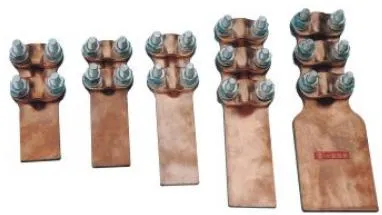
Models: ST-1 – ST-8 (8 sizes) · Conductor: 35–240 mm² · Palm: single, double or four hole
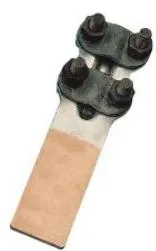
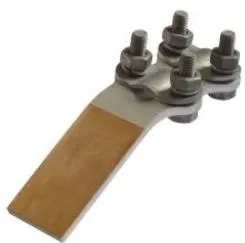
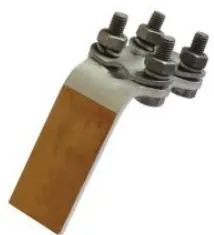
ST is the copper counterpart of the aluminium SL clamp: a bolted clamp, two plates, the conductor gripped between them and the palm bolted to the equipment terminal. No press, no die, no crimped barrel — a spanner and a torque setting.
It exists for one case only: copper conductor onto copper equipment. That restriction is the most important thing on this page, so it comes first.
Copper on aluminium is not a joint, it is a battery
Put an aluminium conductor in an ST clamp and you have made a galvanic cell that runs in wet weather. The aluminium becomes the anode and corrodes — not at the contact face where you would see it, but in the clamped length under the plate, which is exactly where the current has to pass. The resistance climbs quietly, the clamp heats, and the failure shows up as a hot joint months later, not as a loose bolt.
So:
- Copper conductor, copper terminal → ST is correct.
- Aluminium conductor, aluminium terminal → SL.
- Aluminium conductor, copper terminal → a transition clamp, SLG bolted or SYG compressed. The copper-aluminium interface belongs inside the clamp, where it is welded or brazed, not between two metals you bolted together on site.
- Copper conductor, aluminium terminal → the same transition clamps, turned around.
Do not “solve” it with grease, a bimetallic washer, or by tinning the conductor end on site. None of those survive twenty years of thermal cycling.
Same footprint as SL, thinner plate
This is the useful part for anyone swapping metal on an existing structure. ST and SL are dimensioned alike: A, L1 and L are the same on the corresponding sizes, so the clamp lands on the same terminal pad and grips the same length of conductor. What changes is the plate thickness, because copper carries the clamp load in a thinner section:
| Conductor (mm²) | Aluminium SL | Plate B | Copper ST | Plate B |
|---|---|---|---|---|
| 35–50 | SL-1A/1B | 6 mm | ST-3 | 4.8 mm |
| 70–95 | SL-2A/2B | 6 mm | ST-4 | 4.8 mm |
| 120–150 | SL-3A/3B | 7 mm | ST-5 | 5.5 mm |
| 185–240 | SL-4A/4B | 7 mm | ST-6 | 5.5 mm |
The two single-hole ST sizes, ST-1 and ST-2, have no counterpart in the SL A/B range — the aluminium sheet only lists the four larger bodies.
The numbering is by palm, not by conductor
ST-1 to ST-8 is the older designation and it sorts by how many holes the palm carries, which is why conductor ranges repeat down the column:
ST-1,ST-2— single holeST-3toST-6— double holeST-7,ST-8— four hole
Two sizes cover the same conductor at different palm counts: ST-3 and ST-5 are both double hole but for 35–50 and 120–150 mm² respectively, while ST-1 and ST-3 cover the same 35–50 mm² with one hole and two.
Pick by the terminal, then check the conductor. A four-hole palm on a two-hole pad is a drill job on site, and the extra plate width may not clear the hardware.
Technical parameters
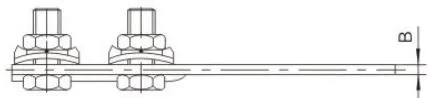
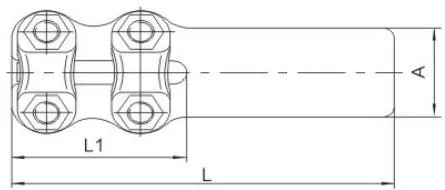
| Model | Palm | Conductor (mm²) | A (mm) | B (mm) | L1 (mm) | L (mm) |
|---|---|---|---|---|---|---|
| ST-1 | single hole | 35–50 | 40 | 4.5 | 65 | 120 |
| ST-2 | single hole | 70–95 | 40 | 4.5 | 80 | 136 |
| ST-3 | double hole | 35–50 | 40 | 4.8 | 65 | 145 |
| ST-4 | double hole | 70–95 | 40 | 4.8 | 80 | 175 |
| ST-5 | double hole | 120–150 | 50 | 5.5 | 125 | 225 |
| ST-6 | double hole | 185–240 | 50 | 5.5 | 125 | 225 |
| ST-7 | four hole | 120–150 | 80 | 5.5 | 125 | 240 |
| ST-8 | four hole | 185–240 | 80 | 5.5 | 125 | 240 |
Reading the columns
- A (mm) — palm width. It sets the footprint on the terminal pad; the four-hole sizes are 80 mm wide against 40–50 mm for the others.
- B (mm) — plate thickness, 4.5, 4.8 or 5.5. Thinner than SL on every matching size, because copper needs less section for the same clamp load.
- L1 (mm) — clamped length over the conductor. The dimension that decides whether the clamp grips the conductor or half of it.
- L (mm) — overall length, palm tip to clamp end.
- Bolt count — not on this sheet. It follows the palm: one hole, two holes, four holes. Send the stud size with the order.
Where the bolts go wrong
A bolted clamp is only as good as its torque, and torque is the one thing nobody photographs. Three habits that prevent most ST failures:
- Torque in a cross pattern, in two passes. Half torque on all bolts, then full torque opposite each other. One bolt at full torque first tilts the plate and the last bolt never seats.
- Mark the bolts. A paint stripe across nut and plate after torquing. On inspection the mark either lines up or it does not, and it takes a second to read.
- Re-torque after the first thermal cycle. Copper and aluminium both relax under clamping load when they first heat. A joint that was right in the workshop can be under-torqued after a month in service.
Ordering
Send the model, the conductor size, the stud size for the palm holes, and the finish if the site is coastal. Say plainly whether the conductor is copper or aluminium — the second one should not be an ST.
FAQ
Can ST take an aluminium conductor? No. Bolted copper to aluminium corrodes under the plate, where you cannot see it. Use SL for aluminium on aluminium, or a transition clamp for aluminium on copper.
Is ST a straight replacement for SL? On the four matching sizes, yes — same A, same L1, same L, so it lands on the same pad. The plate is thinner and the metal is different.
Which ST for 120–150 mm² with a two-hole pad? ST-5. ST-7 covers the same conductor with a four-hole palm and a wider 80 mm plate.
Why is the ST plate thinner than SL? Copper is stronger in the section that carries the bolt load, so the plate can be thinner for the same clamping force. The clamp is not weaker for it — but do not interchange plates between the two ranges.
Do I need to grease the joint? Clean and dry is the rule for copper on copper. Contact grease helps in humid or coastal service, but it does not make a copper-aluminium joint acceptable.