DTL-F Waterproof Copper-Aluminium Terminal
Models: DTL-F-25 – DTL-F-500 (12 sizes)
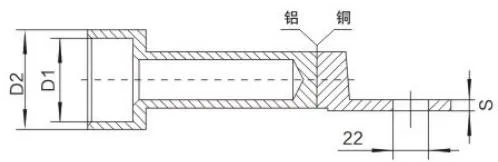
DTL-F is the DT-F waterproof lug built for an aluminium conductor. The barrel is aluminium, the palm is copper, and the two are welded at the shoulder — so the seal at the mouth is protecting an aluminium-to-aluminium crimp, which is the only crimp that survives in a wet location.
The direction is the standard one, the same as the unsealed DTL and the same as the circuit-breaker DTLC: aluminium in, copper out. In the section drawing the label on the long barrel reads 铝 and the label at the shoulder, where the palm begins, reads 铜.
Why bimetal, and why here
An aluminium conductor crimped into a copper barrel is a galvanic couple. Dry, it is tolerable — this is what a plain DTL is for. Wet, it is not: with an electrolyte present the aluminium becomes the anode and goes first, and it goes at the one place you cannot inspect, between the strands and the barrel wall. The seal keeps the electrolyte out of that interface. That is the whole reason this part exists rather than a DTL plus tape.
The alternative, a bimetallic transition plate at the palm, is a perfectly good answer too — and cheaper. It works when the palm lands on a busbar you can reach. It does not work when the palm bolts to a single stud inside a sealed cabinet.
Ten millimetres more than DT-F
Put the two tables side by side and every size is longer. DT-F-25 is 110 mm, DTL-F-25 is 120. DT-F-300 is 141, DTL-F-300 is 151. Same conductor, same palm width, same hole — ten millimetres more.
That ten millimetres is aluminium crimp length. Aluminium conducts at roughly 61 % of copper, so a joint that carries the same current through aluminium needs a longer contact area to keep the current density at the crimp within limits. The extra length is not styling and it is not tolerance; if you are swapping a DT-F for a DTL-F in a tight cabinet, that ten millimetres still has to fit.
Two more things the numbers say:
- D2 tracks DT-F’s D almost exactly — 37 mm up to 150 mm², 41 mm above — so the sealing sleeve is the same family of part. The 1 mm difference above 185 mm² is the thicker barrel wall underneath it.
- The 400 and 500 are a different build, not a scaled 300. S goes from 7.8 mm at 300 to 12.8 mm at 400, and L jumps by 38 mm. If you are quoting one of those two, ask for the drawing rather than extrapolating from the 300.
Technical parameters — DTL-F, aluminium barrel / copper palm
| Model | Main dimensions (mm) | ||||||
|---|---|---|---|---|---|---|---|
| Φ | D2 | D1 | L | L1 | W | S | |
| DTL-F-25 | 11 | 37 | 31 | 120 | 30 | 26 | 3.5 |
| DTL-F-35 | 11 | 37 | 31 | 120 | 30 | 26 | 3.5 |
| DTL-F-50 | 11 | 37 | 31 | 122 | 34 | 30 | 3.5 |
| DTL-F-70 | 11 | 37 | 31 | 124 | 34 | 30 | 4.0 |
| DTL-F-95 | 11 | 37 | 31 | 124 | 34 | 30 | 4.0 |
| DTL-F-120 | 13 | 37 | 31 | 136 | 38 | 32 | 4.5 |
| DTL-F-150 | 13 | 37 | 31 | 136 | 38 | 32 | 5.0 |
| DTL-F-185 | 13 | 41 | 35 | 144 | 42 | 36 | 5.5 |
| DTL-F-240 | 13 | 41 | 35 | 146 | 46 | 40 | 6.8 |
| DTL-F-300 | 17 | 41 | 35 | 151 | 50 | 40 | 7.8 |
| DTL-F-400 | 17 | 41 | 35 | 189 | 50 | 44 | 12.8 |
| DTL-F-500 | 17 | 41 | 35 | 194 | 50 | 44 | 12.8 |
Note: dimensions may vary slightly with manufacturing tolerance. Confirm against the drawing before you cut steel.
| Column | Meaning |
|---|---|
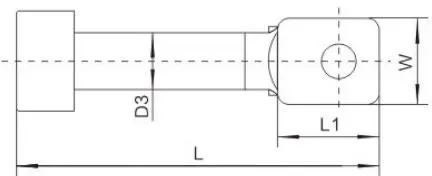
| Φ | palm hole diameter — same as DT-F at every size |
| D2 | diameter across the sealing sleeve |
| D1 | bore of the sleeve, i.e. the barrel outside diameter under it |
| L | overall length, sleeve included |
| L1 | palm length, shoulder to palm end |
| W | palm width |
| S | palm thickness |
Ordering the right one
Three questions, in this order:
- Is the conductor copper or aluminium? Copper → DT-F. Aluminium → this page.
- Is the joint wet? If not, drop the F: DTL is the same transition without the seal, and cheaper.
- Does the stud pattern match? Both F parts are single-hole. Two holes means a drawing.
The mistake worth guarding against is ordering a DT-F for an aluminium cable because “it’s the waterproof one”. It is waterproof and it is also the wrong metal, and no amount of sealing fixes a copper barrel full of aluminium strands.
Related terminals
- DT-F — sealed, all copper, 25–500 mm².
- DTL — unsealed copper-aluminium transition, the standard direction.
- DTLC — copper-aluminium lug with an offset palm for a breaker pad.
- DLM — unsealed aluminium lugs, single and two-hole.
FAQ
Is the whole body aluminium or only the barrel? The barrel is aluminium and the palm is copper; the joint between them is welded at the shoulder, not bolted or pressed. That weld is off-the-shelf production, not a special.
Can it take a copper conductor? Physically yes, and you should not. Copper in an aluminium barrel is the same galvanic couple with the metals swapped, and the copper will be the cathode that pushes the aluminium barrel into failure.
Does S matter? Yes, if you are bolting to a recessed or stepped pad. S is the palm thickness, and it runs from 3.5 mm to 12.8 mm across the range — nearly four times. Check the tab depth on the busbar before you assume the palm will sit flat.