TLYP Copper Aluminium Composite Sheet
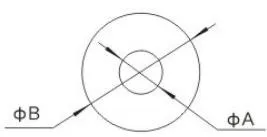
Forms: washers, terminal plates, square sheet · Thickness: 1 mm or 2 mm · Use: bimetallic joint interface
What a Composite Sheet Does
Put copper and aluminium in direct contact and you have made a galvanic cell. Add moisture — which every outdoor joint gets — and the aluminium becomes the anode and corrodes, at a rate that depends on current density and how often the joint wets and dries.
A copper-aluminium composite sheet breaks that cell. The two metals are bonded at the factory under pressure, so the transition happens inside the material where no electrolyte can reach it, and each face of the sheet meets its own metal. The joint you bolt up is then copper-to-copper on one side and aluminium-to-aluminium on the other.
Four Forms, One Material
The catalogue lists the same composite in four shapes:
| Form | Model series | Rows |
|---|---|---|
| Round washer | TLYP130-6 to -14 | 5 |
| Thin round washer | TLYP2-2-14, -16 | 2 |
| Terminal plate | TLFP12-14, -16 | 2 |
| Square sheet | 1×50×50 to 2×150×150 | 14 |
Round washers — TLYP130
| Model | Hole ØA | OD ØB | Thickness |
|---|---|---|---|
| TLYP130-6 | 6.5 mm | 30 mm | 2 mm |
| TLYP130-8 | 8.5 mm | 30 mm | 2 mm |
| TLYP130-10 | 10.5 mm | 30 mm | 2 mm |
| TLYP130-13 | 13.0 mm | 30 mm | 2 mm |
| TLYP130-14 | 14.6 mm | 30 mm | 2 mm |
One outside diameter, five bolt holes from M6 to M14. Hole ØA is the bolt clearance, not the bolt size — 6.5 for M6, 10.5 for M10, 14.6 for M14.
Thin washers and terminal plates
| Model | ØA | ØB / B | C | Thickness |
|---|---|---|---|---|
| TLYP2-2-14 | 14.5 mm | Ø 27 mm | — | 1 mm |
| TLYP2-2-16 | 16.5 mm | Ø 30 mm | — | 1 mm |
| TLFP12-14 | 14.5 mm | 31 mm | 51 mm | 1 mm |
| TLFP12-16 | 16.5 mm | 36 mm | 55 mm | 1 mm |
The TLFP plates are rectangular, not round — B × C of 31 × 51 and 36 × 55 mm — for a lug or a busbar terminal where a round washer would not cover the contact face.
Square sheet
Fourteen sizes from 1×50×50 to 2×150×150 mm. The first figure is the thickness in millimetres, the other two the side lengths.
Choosing Thickness
1 mm for a bolted joint where the two faces are machined and flat. 2 mm where there is any chance of the joint face not seating perfectly, or where the bolt load has to be spread.
Do not stack two thin washers to make a thick one — each interface is a place where the bond can be interrupted and the whole point is to have one clean transition.
Where It Is Used
- Copper lug on an aluminium busbar — the classic case
- Aluminium cable terminal on copper equipment — switchgear, CTs, breakers
- Between a copper jumper and an aluminium clamp body
- Under a bolt head where a copper bolt passes through an aluminium plate
Sizing is by the bolt, not the conductor: match ØA to the bolt, and make sure the outside diameter covers the contact area you need.
Technical Parameters
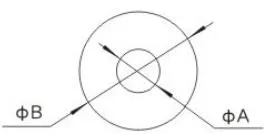
Round washers, 2 mm
| Model | Main Dimensions (mm) | ||
|---|---|---|---|
| Inner Hole ΦA (mm) | OD ΦB (mm) | Thickness (mm) | |
| TLYP130-6 | 6.5 | 30 | 2 |
| TLYP130-8 | 8.5 | 30 | 2 |
| TLYP130-10 | 10.5 | 30 | 2 |
| TLYP130-13 | 13.0 | 30 | 2 |
| TLYP130-14 | 14.6 | 30 | 2 |
Thin round washers, 1 mm
| Model | Main Dimensions (mm) | ||
|---|---|---|---|
| Inner Hole φA (mm) | OD φB (mm) | Thickness (mm) | |
| $TLYP_{2}2-14$ | 14.5 | 27 | 1 |
| $TLYP_{2}2-16$ | 16.5 | 30 | 1 |
Terminal plates, 1 mm
| Model | Main Dimensions (mm) | |||
|---|---|---|---|---|
| ØA (mm) | B(mm) | C(mm) | Thickness (mm) | |
| TLFP12-14 | 14.5 | 31 | 51 | 1 |
| TLFP12-16 | 16.5 | 36 | 55 | 1 |
Square sheet
| Specification | Main Dimensions (mm) | ||
|---|---|---|---|
| A | B | T | |
| 1x50x50 | 50 | 50 | 1 |
| 1x60x60 | 60 | 60 | 1 |
| 1x80x80 | 80 | 80 | 1 |
| 1x100x100 | 100 | 100 | 1 |
| 1x120x120 | 120 | 120 | 1 |
| 1x125x125 | 125 | 125 | 1 |
| 1x150x150 | 150 | 150 | 1 |
| 2x50 x50 | 50 | 50 | 2 |
| 2x60x60 | 60 | 60 | 2 |
| 2x80x80 | 80 | 80 | 2 |
| 2x100x100 | 100 | 100 | 2 |
| 2x120x120 | 120 | 120 | 2 |
| 2x125 x125 | 125 | 125 | 2 |
| 2x150x150 | 150 | 150 | 2 |
Related Products
Copper-aluminium transition plates for busbar joints: MG copper aluminium transition plate. Explosion-welded version: MGB transition plate. Brazed version: MG brazed transition plate. Bimetal T clamps: TJG insulated T clamp.
Note: Hole ØA is bolt clearance. Specify thickness and outside diameter together — a 1 mm washer will not substitute for a 2 mm one in a joint that has to carry bolt preload.